



The C-store landscape is increasingly competitive. Store operators are continually seeking ways to increase basket size, improve margins, and enhance the overall customer experience. While technology, loyalty programs, and foodservice often dominate the conversation, one foundational strategy continues to deliver consistent results: product placement in C-stores.
At H&S Energy, we work closely with convenience store operators across diverse markets, and we’ve seen firsthand how intentional product placement — combined with fully stocked and well-faced shelves — directly impacts sales performance. Merchandising isn’t just about aesthetics; it’s about guiding customer behavior in an environment where speed and convenience are paramount.
 The Convenience Store Customer: Fast Decisions, Visual Cues
Most C-store shoppers enter with a specific need in mind, but a significant portion of in-store purchases are influenced by what customers see as they move through the store. Shoppers make decisions quickly, relying heavily on visual cues, accessibility, and familiarity. Products that are easy to find and clearly displayed are far more likely to be purchased than those that require searching or feel disorganized.
Effective product placement anticipates this behavior. When customers can intuitively locate items — or discover complementary products along their path — the shopping experience feels seamless. That ease not only improves satisfaction but also increases the likelihood of incremental purchases.
Maximizing High-Traffic Zones
Every convenience store has areas that naturally attract more foot traffic: entrances, beverage coolers, foodservice zones, coffee stations, and checkout counters. These spaces represent premium merchandising opportunities, and how they are utilized can significantly influence overall store performance.
Strategically placing high-margin items, limited-time offers, and top sellers in these zones increases exposure and encourages impulse purchases. We also emphasize cross-merchandising — placing products together that naturally pair well — to create logical, convenient buying moments for customers. When executed correctly, these placements work quietly in the background, increasing transaction value without disrupting customer flow.
The Importance of Fully Stocked and Faced Shelves
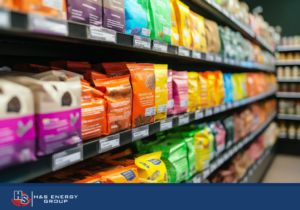
Even the most carefully planned merchandising strategy loses effectiveness if shelves are empty or poorly maintained. Keeping products stocked and properly faced — aligned, pulled forward, and label-out — is essential to both perception and performance.
Empty shelves signal missed opportunities. They can suggest limited selection, inconsistent inventory management, or reduced freshness, all of which may discourage additional purchases. In contrast, full and well-faced displays convey reliability, abundance, and professionalism. From our experience, stores that maintain consistent facing standards tend to see stronger sales and higher customer confidence.
Eye-Level Placement and Sales Velocity
One of the most proven principles in retail merchandising remains eye-level placement. Products positioned at eye level naturally receive more attention and typically sell faster than those placed higher or lower on the shelf. This makes eye-level space especially valuable for new products, best-selling items, and categories with higher margins.
Lower shelves can still perform well for destination items customers actively seek, while upper shelves may be suitable for slower-moving or specialty products. Aligning shelf placement with consumer behavior allows operators to optimize space without expanding store size or assortment complexity.
Checkout Merchandising and Impulse Sales
The checkout area remains one of the most influential sales zones in a convenience store. Customers are already committed to purchasing, and well-placed, easy-to-grab items can meaningfully increase transaction totals. However, effectiveness depends on balance.
Clean, organized checkout displays tend to outperform cluttered ones. When customers can quickly process available options without feeling overwhelmed, impulse purchases occur more naturally. Seasonal items, small indulgences, and single-use products all perform well in this environment when displayed thoughtfully.
Product Placement as an Ongoing Strategy
Successful product placement in C-stores is not a one-time initiative — it’s an ongoing process that evolves with consumer trends, seasonal demand, and sales data. Regularly reviewing performance metrics and adjusting placement accordingly allows store operators to stay responsive and competitive.
At H&S Energy, we view merchandising discipline as a core operational practice, not an afterthought. When product placement, inventory management, and store presentation work together, the result is a retail environment that supports both customer satisfaction and long-term profitability.
If you’re looking for ways to improve in-store performance, increase sales, and create a more efficient and customer-focused retail environment, we invite you to connect with our team. Visit H&S Energy to learn more about our services and discover how H&S Energy can help support the long-term success of your convenience store business.